“…to show that I lived.”
His answer, when someone asked why he makes knives. “My work will last hundreds of years longer than I will. But now they will know I was here.” Jerry Fisk has forged full-time since 1989 in Nashville, Arkansas.
The decisions that matter are made at a scale you cannot see.

Field of view 14 in
Photograph — Chuck Ward
He mortises the handle so that natural material — ivory, stag, horn — has a fault line to move along when the weather changes, instead of splitting. Which only works if the fit is tight enough to need almost no bonding material.
Tang length on knives without pommels runs to within half an inch to an eighth of an inch of the back of the handle. That is what holds the handle on under abuse.
Two of these have never been given to the same smith twice.
In permanent collections
New York State Museum · Historic Arkansas Museum, with a special tribute to professional achievements · a privately owned Swiss museum
Taught, lectured or demonstrated
São Paulo · Paris · St Petersburg
He conceived and developed, with Brazilian knifemakers, the bladesmithing schools in São Paulo and Brasília.
Natural materials, engraved by the same hands that forged them.
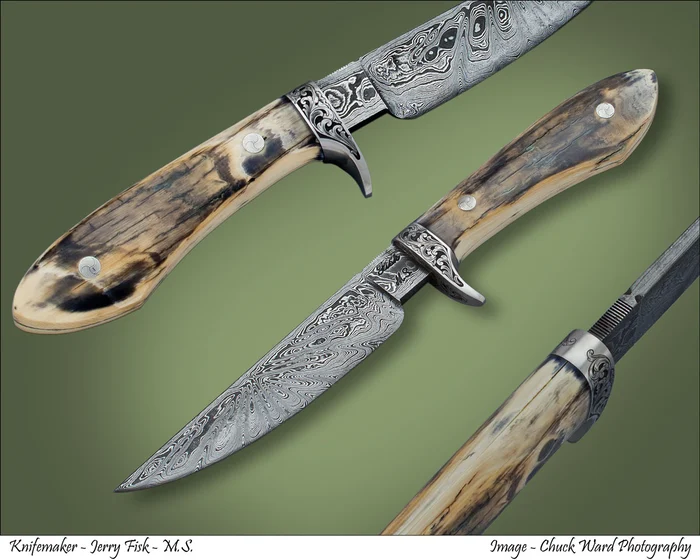
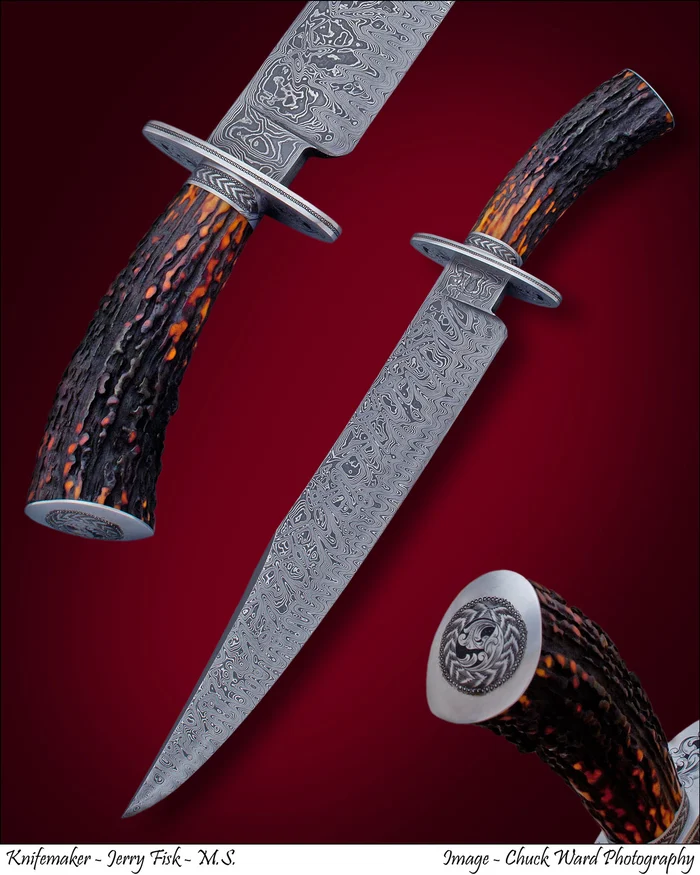
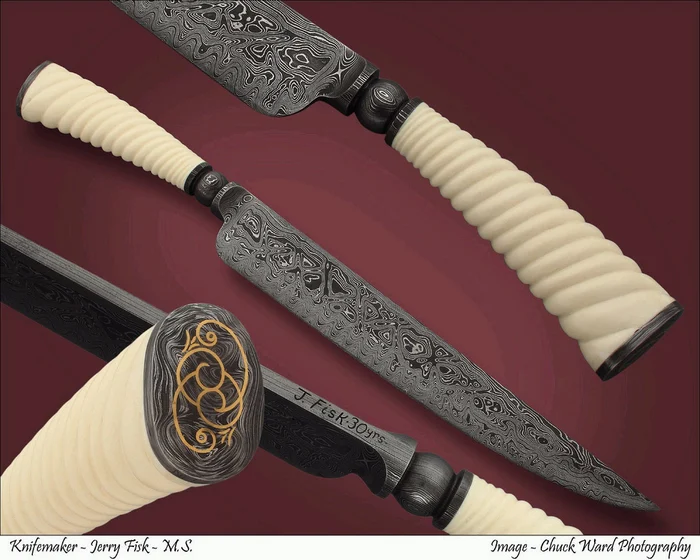
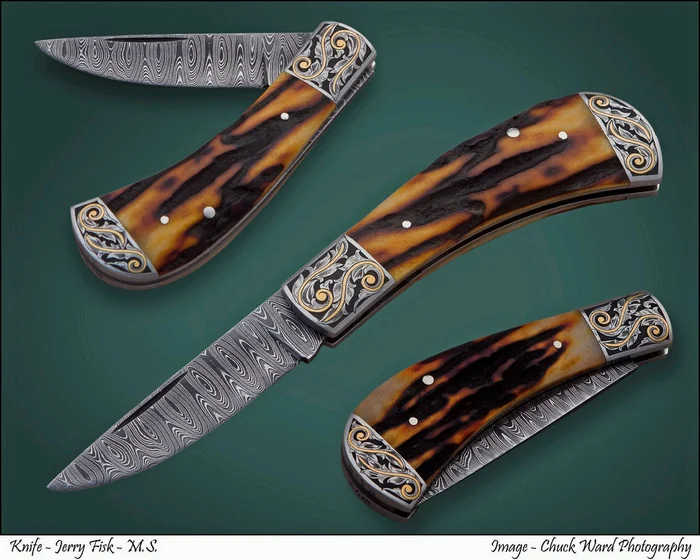
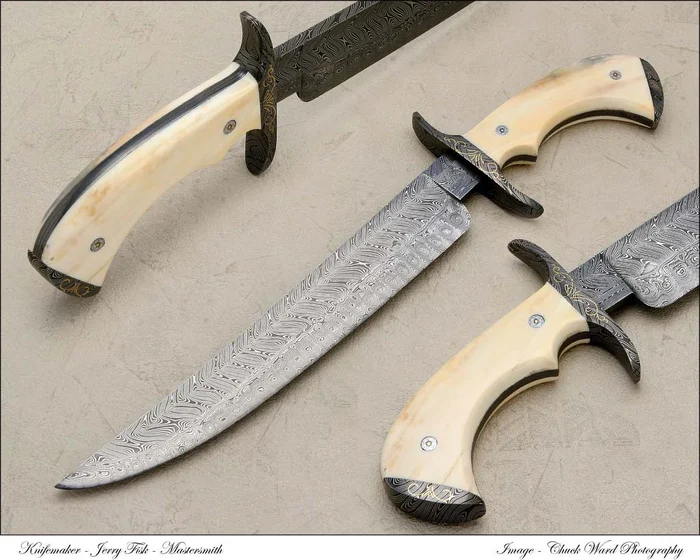
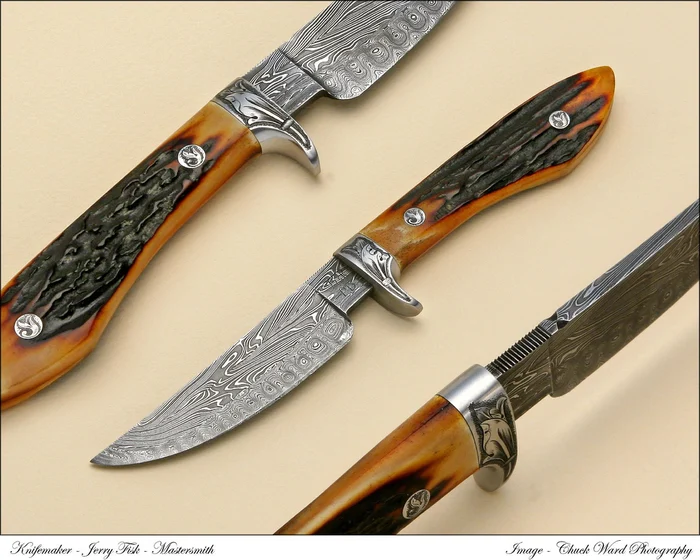
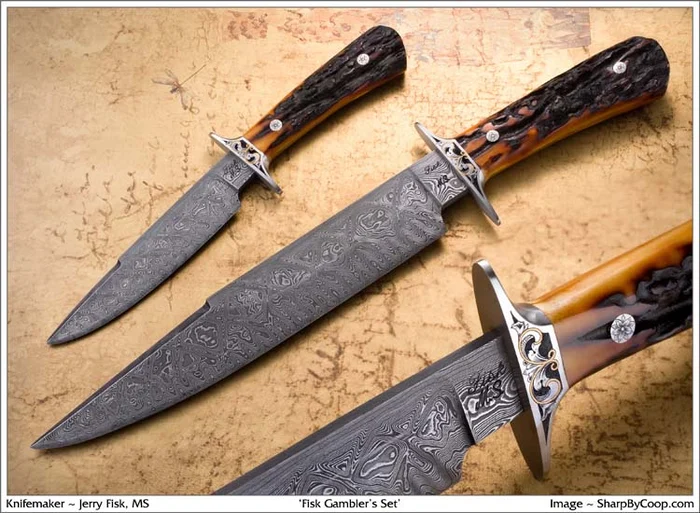
A week, at ten hours a day, on one handle.
Four measurements, in the order the work reaches them
Station one
.004″
Maximum total gap between handle material and tang on a mortised handle.
Station two
½″ – ⅛″
How close the tang runs to the back of the handle, on knives without pommels.
Station three
60 sec
Etch in muriatic acid to raise the grain in pre-Civil War wrought iron, after forging, grinding and mirror polishing.
Station four
50 hrs
Gain twist fluting on one ivory handle — a three-cornered file, then sandpaper glued to ice-cream sticks, then steel wool, then finer and finer paper.
Guards are press fit — German silver, steel, stainless, Damascus, bronze, copper, wrought iron. Blades are traditional carbon steel, or steels he blends himself into Damascus. Temper lines are straight, or laid on with the clay coating method for a wavy line, then etched and polished with automotive compound backed on leather.
Every blade he makes, field grade to ornate, is tested to be sure it performs the way it was designed to and is as strong as the design allows. He does his own engraving and his own gold and silver work, by hand.
Until I was 10 years old I thought my name was “boy, go get water”.
Jerry Fisk
One of five boys. His father, a preacher, bought an abandoned house for about $250; when it rained each boy watched his own leak and kept the bucket from going over. Running water came when he was fifteen.
At ten he watched an old blacksmith make his father’s cattle brand, put the “f” in backwards, take it apart and do it right. At eleven another smith moved to town without much money and his father helped him set up his shop — the first forged blades he ever saw. In sixth grade his class took a field trip to the old Washington blacksmith shop, where James Black forged a knife for Jim Bowie.
Forging knives for a living has been a hot and dirty job throughout history. It is no different now. The glamour fades quickly as you burn the shirts off your body.
Jerry Fisk
He prefers designs drawn from something that simulates nature, and prefers to work in natural materials. He says the only limits in the field are the ones he puts on himself.
Nashville, Arkansas 71852.
Nashville, Arkansas 71852
Jerry Fisk · M.S. · Nashville, Ark.